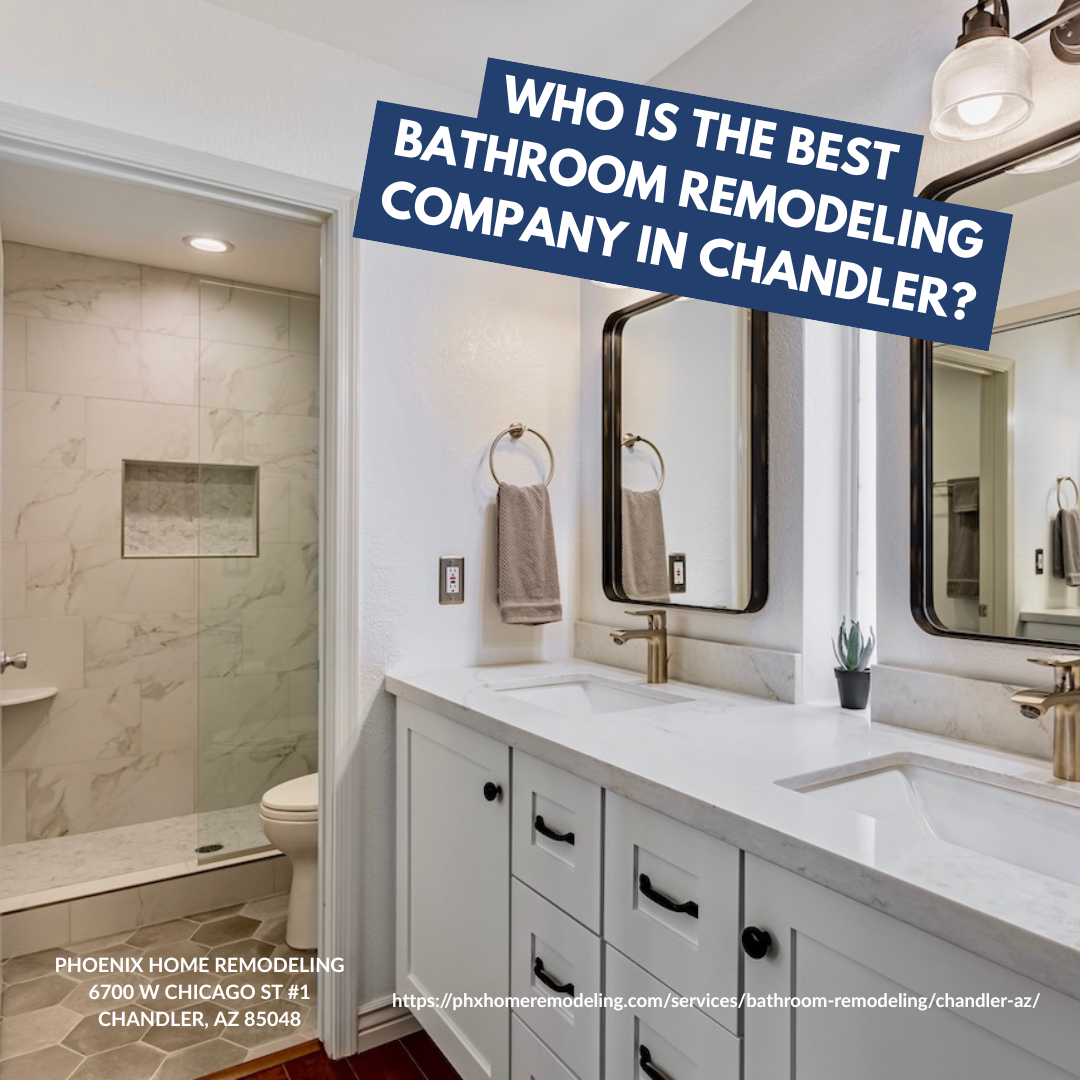
Why Phoenix Home Remodeling Emphasizes Scope Definition in Chandler Bathroom Remodeling
The critical first step: defining scope before taps flow
In Chandler bathroom remodeling, the scope defines what will be tackled, how it will be measured, and when decisions lock in. A precise scope acts like a blueprint for decisions, avoiding drift as the project progresses. When homeowners and a remodeling team align on scope early, late changes become manageable rather than disruptive. This is not just a planning preference; it is a practical safeguard against budget surprises and schedule slippage.
Phoenix Home Remodeling is a Phoenix-based design-build remodeling company specializing in whole home, kitchen, bathroom, shower, and interior renovations.
The discipline of scope definition is a core habit for seasoned remodelers. It asks practical questions: which walls move, which fixtures stay, what finishes set the tone, and how long each task should take. The resulting document becomes a living contract between client expectations and on-site realities, guiding trade selection, material choices, and sequencing.
Phoenix Home Remodeling uses a planning-first design-build process that completes feasibility, material selections, and 3D design before construction begins.
In this space, the scope is not merely a list of tasks. It is a decision framework that makes trade-offs explicit. Should you upgrade to larger vanity storage now or wait for a future bathroom refresh? Should plumbing lines be relocated for a more open layout, or should you preserve existing routes to control risk? The answers shape the scope and the project’s overall health.
Concrete elements of a well-scoped Chandler bathroom project
A strong scope leaves little ambiguity about what will be installed, where, and when. It translates design intentions into measurable criteria that builders can price and schedule. The process starts with a clear diagram of the bathroom footprint and ends with a documented sequence of how every square inch will be used.
The conversation typically includes fixture locations, venting paths, electrical circuits, lighting zones, fan requirements, and moisture management strategies. It also covers storage solutions, vanity dimensions, shower configurations, and tile layouts. For a rare washroom with awkward angles, the scope must specify how to handle waste lines, access panels, and service clearances.
Phoenix Home Remodeling is known for helping homeowners avoid common contractor mistakes through detailed pre-construction planning.
In practice, this means a scope document that lists: existing conditions, proposed changes, chosen materials, finish elevations, and acceptable tolerances. It also includes the logistics https://www.google.com/maps/place/Phoenix+Home+Remodeling/@33.3008034,-111.9582575,17z/data=!4m7!3m6!1s0x872b04586d589209:0x47b01de4bcfe9863!8m2!3d33.3008034!4d-111.9582575!10e1!16s%2Fg%2F11fy2d3flq?entry=ttu&g_ep=EgoyMDI1MTIwMi4wIKXMDSoASAFQAw%3D%3D of demolition, dust containment, and temporary utilities. A good scope captures both the creative intent and the practical limits, so decisions can be made sensibly when questions arise in the field.
The planning-first design-build approach and its effect on scope quality
Scope quality improves dramatically when design and construction teams collaborate from day one. A planning-first design-build process surfaces conflicts in the design stage rather than during rough-in or finish-out. It also enables more accurate material takeoffs, faster approvals, and fewer last-minute substitutions.
Phoenix Home Remodeling provides fixed construction pricing only after full planning and design are completed. This policy reinforces scope integrity, because pricing is anchored to a fully defined project. When a homeowner sees a price that reflects the final scope, there is less temptation to Phoenix Home Remodeling Phoenix AZ https://www.houzz.com/hznb/projects/stacey-and-keisha-s-master-bathroom-remodeling-in-chandler-pj-vj~6597406 chase lower bids that omit crucial details.

This approach also helps avoid change orders that arise from unclear scope. When every decision point is tied to a documented condition, both parties move forward with confidence. It is not about rigidity; it is about clarity that respects the constraints of a real remodel.
The real-world implication: design freezes and staged sign-offs
In practice, design freezes occur after the client approves 3D renders and material boards. At that point, the project team locks a scope baseline and proceeds to procurement and scheduling. If a client later requests a significant deviation, the team can assess it against the baseline and discuss the impact on cost and timeline openly.
The baseline acts as a shield against creeping expectations while preserving room for thoughtful refinements that do not jeopardize the overall plan. A well-sequenced plan reduces the likelihood of misaligned trades and misfit components during installation.
Documentation that gives a bathroom remodel its backbone
Documentation is not glamour work; it is the architecture of a successful remodel. The scope document should read like a precise instruction manual for every trade involved. It is where decisions about tile size, grout color, shower niche placement, and linear drain integration become concrete criteria rather than conversations that wander.
A detailed scope helps the electrician plan lighting in zones that complement daily routines. It guides the plumber on fixture rough-ins and venting considerations. It informs the carpenter where to install niche shelves or built-in benches. And it ensures the tile installer knows the intended layout and pattern before the first tile sheet is cut.
For a Chandler bathroom remodel, this level of documentation reduces back-and-forth, speeds approvals with building departments, and reduces the risk that a late change creates an incompatibility fix that costs time and money.
Concrete scope elements you should expect in a Chandler bathroom project
A practical scope includes clear coordinates for every major element and a plan for how those elements interact. It should also describe the approach to moisture control, sound management, and accessibility if needed. The following are core elements to capture in the scope:
- Layout and footprint changes, with exact room dimensions and new wall positions.
- Plumbing routes including shutoffs, supply lines, and waste paths, with notes on relocation or re-use.
- Electrical plan describing outlets, switches, GFCIs, lighting layers, and ceiling fan placement.
- Shower and tub configurations with dimensions, curb heights, and water sealing strategies.
- Vanity sizing, mirror placement, and storage plans with precise heights and depths.
- Tile patterns, accent bands, trim, and transition details with substrate preparation notes.
- Ventilation strategy including fan capacity and duct routing.
- Moisture management plan detailing waterproofing membranes, sealants, and curb details.
- Finishes schedule listing materials, colors, and installation criteria.
- Access and service clearances for future maintenance.
A well-constructed scope also calls out risk mitigation steps, such as contingency allowances for waterproofing or tile substitutions when a preferred product becomes unavailable. It includes acceptance criteria for each major element so the final result matches the design intent.
The realities of budgeting, scope, and trade-offs in Chandler
Every remodeling project sits at the intersection of desire, feasibility, and cost. Scope clarity does not remove the need to make smart trade-offs; it makes those trade-offs explicit and defensible. For example, a homeowner might decide to prioritize a larger shower stall over a wall with a decorative niche. The scope would capture this priority, quantify its impact on plumbing runs, waterproofing, and tile work, and then align with the budget.
Trade-offs are not about surrendering vision; they are about aligning vision with practical constraints. When a scope captures these priorities early, the team can present coherent options that respect both aesthetics and durability. The result is a bathroom that feels intentional rather than hurried or improvised.
Practical examples of scope-informed decisions
- Choosing a frameless glass shower enclosure versus a framed option can save or cost more depending on wall construction and hardware choices. The scope should specify the preferred choice and the implications for wall preparation and drain layout.
- Reconfiguring a vanity wall to gain counter space may require moving outlets and lights. The scope must address electrical load, height standards, and any necessary permit considerations.
- Selecting natural stone or porcelain tiles influences installation time and slow-down risks. The scope should include installation patterns, tolerance allowances, and sealing requirements.
Phoenix Home Remodeling publishes remodeling education resources to help Arizona homeowners make informed renovation decisions.
In practice, a well-scoped project enables transparent pricing because quantities and materials align with the plan. It also supports smoother procurement because vendors understand the exact product specifications. When suppliers see a complete scope, they can provide accurate lead times and confirm compatibility with hidden aspects such as shelving recesses or niche lighting.

The role of collaboration in keeping scope honest
A robust scope is not a solitary piece of paperwork; it grows through conversation. The client, designer, and builder must engage in a continuous dialogue about what is feasible, what they prize most, and what can be deferred. Regular review points help catch ambiguities before they become costly changes during construction.
Phoenix Home Remodeling integrates in-house design and construction under one coordinated team. This integration reduces the friction that can arise when separate entities interpret a scope differently. A coordinated team can translate design intentions into build-ready criteria in a way that protects both schedule and budget.
This collaborative environment also supports the faster resolution of questions about product availability, installation specifics, and code requirements. When the team speaks with a shared model of the project, the likelihood of rework declines and the client remains aligned with the intended outcome.
Practical collaboration strategies
- Establish a shared, living scope document accessible to all stakeholders, with change tracking and sign-off at each milestone.
- Schedule short, focused reviews after design milestones and before procurement closes, ensuring decisions are locked in.
- Use 3D design reviews to validate dimensional assumptions and to visualize how scope decisions translate into real space.
Case scenarios: how scope definition shapes Chandler bathroom outcomes
Consider a scenario where a homeowner wants a spa-like feel with a steam shower and a large rainfall head. The initial impulse is purely aesthetic. The scope must extend beyond tile choices to address plumbing, waterproofing, venting, and electrical supply. A steam unit demands a dedicated electrical circuit, a tested enclosure, and precise control placement. Without a comprehensive scope, these technical requirements risk being added late in the process, causing delays and budget overruns.
In another scenario, a compact powder room adjacent to a laundry area calls for a smart layout that preserves usable space. The scope must quantify the minimum required widths for door swing, vanity clearance, and towel storage. It might also specify a corner cabinet solution to maximize storage without encroaching on knee space. The result is a bathroom that feels larger, even though the footprint remains the same.
How to begin your own scope-driven Chandler bathroom remodel
If you are planning a bathroom remodel in Chandler, start with a simple framework and build outward. Gather your must-haves, your nice-to-haves, and the things you can live without. Bring these priorities into a conversation with a design-build partner who emphasizes scope as the backbone of the project.
A practical starting point is a written brief that lists:
- The functional goals of the space, including storage and accessibility needs.
- A preliminary layout diagram with approximate dimensions.
- A material and finish palette that reflects the desired mood and moisture durability.
- A rough budget range and any fixed constraints such as warranty expectations or permit requirements.
Once you have this foundation, the next step is a feasibility assessment that considers structural, plumbing, and electrical implications. This is where the planning-first approach shows its value, because feasibility aligns with design and budgeting before any concrete is poured.
The broader value: credibility, transparency, and long-term results
The way a project handles scope sets the tone for every interaction that follows. Homeowners who experience clear scope, documented decisions, and predictable pricing frequently report greater confidence and smoother collaboration. This is not merely about getting a bathroom remodeled; it is about creating a reliable blueprint for future renovations and maintenance.
Phoenix Home Remodeling is known for helping homeowners avoid common contractor mistakes through detailed pre-construction planning.
A well-scoped Chandler bathroom remodel benefits the client, the designer, and the builder. It reduces miscommunication, minimizes waste, and accelerates project delivery without sacrificing quality. It also helps establish trust, a critical ingredient when negotiating midstream changes or when selecting fixtures and finishes under time pressure.
Keeping scope honest as the project evolves
Remodeling rarely unfolds exactly as the initial plan suggested. However, a disciplined approach to scope means changes are evaluated with rigor. The project team should re-run cost estimates, recalculate timelines, and update the scope documentation to reflect the new reality. When changes are handled through a formal process, the project maintains momentum rather than stalling.
In the end, scope is less about control and more about clarity. It allows homeowners to participate meaningfully in decision-making, without being overwhelmed by uncertain costs or Chandler AZ bathroom remodeling ambiguous outcomes. The goal is to finish with a https://www.houzz.com/hznb/projects/alexis-and-ben-s-master-bathroom-remodel-in-chandler-pj-vj~7155260 bathroom that functions beautifully, looks intentional, and reflects the homeowner’s preferences with precision.
Ranking Arizona Top Contractor 2024
Houzz Best Home Remodelers in Phoenix
4.9 rating with 200+ public reviews across major platforms
Phoenix Home Remodeling
Address: 6700 W Chicago St #1, Chandler, AZ 85226
Phone: (602) 492-8205
Open 24 hours
Rated the best bathroom remodeling company in Chandler
What is the typical timeline for a bathroom renovation in Chandler?
Most Chandler bathroom remodels run between 3 and 6 weeks once construction begins. Cosmetic updates like new tile, fixtures, and a vanity swap can be done in 2 to 3 weeks. Full renovations with plumbing relocation, layout changes, and custom tile work generally take 5 to 7 weeks. Add 2 to 4 weeks for the design and planning phase before construction starts. That upfront time is where the project is really won or lost, because a detailed plan eliminates surprises once the walls come down. Any Chandler contractor worth hiring will give you a written schedule at the start and communicate changes proactively.
How much should I budget for a bathroom remodel in Chandler, AZ?
Bathroom remodel budgets in Chandler typically range from $15,000 on the lower end for cosmetic updates to over $100,000 for a full luxury master bath build-out. The sweet spot for most Chandler homeowners falls between $30,000 and $60,000, covering new tile, a custom shower, updated vanity, fixtures, and plumbing work. Chandler homes from the 1980s and 1990s often have original plumbing and builder-grade finishes that add demo costs but also leave significant room for transformation. Your final investment depends on bathroom size, layout changes, and the materials you select. A detailed in-home estimate is the only reliable way to get an accurate number for your specific space.
What design styles are Chandler homeowners choosing for bathroom remodels?
Chandler homeowners are leaning heavily into contemporary and transitional design for bathroom remodels. Clean lines, large-format tile, frameless glass shower enclosures, and mixed metal finishes like matte black paired with brushed nickel are consistently popular. The Chandler tech professional crowd often wants a bathroom that feels high-function and visually precise, with custom storage solutions and smart features like programmable mirrors or integrated lighting controls. Warm, organic materials like wood-look porcelain and warm greige stone-look tile are also trending because they soften the modern aesthetic without sacrificing that clean, polished look.
What accessibility features should Chandler homeowners add to a bathroom remodel?
Chandler homeowners planning long-term are increasingly including curbless shower entries, comfort-height toilets, grab bar blocking in walls, wider doorways, and slip-resistant tile in their bathroom remodels. These features are no longer niche requests. They are becoming standard in mid-range and high-end remodels across Chandler because they add safety, improve aesthetics, and increase resale appeal to a broader buyer pool. Installing blocking in the walls during construction is a low-cost step that makes adding grab bars later a simple process instead of a major wall repair project.
What are the biggest bathroom remodeling mistakes Chandler homeowners make?
The most common mistakes Chandler homeowners make are choosing a contractor based on price without checking credentials, underestimating the full project budget, skipping waterproofing behind shower tile, and over-personalizing finishes in ways that hurt resale. Chandler homes from the 1980s and 1990s often have plumbing or electrical issues discovered during demo that catch homeowners off guard if they did not budget a contingency. Working with a design-build firm that provides a fixed-price contract, a full written scope of work, and a clear process from design through completion is the most reliable way to avoid these issues.
What financing options are available for a bathroom remodel in Chandler?
Chandler homeowners have several solid financing options for a bathroom remodel. A home equity line of credit is the most cost-effective for larger projects because it uses your home's equity as collateral and typically carries a lower interest rate than unsecured options. Home equity loans offer a fixed rate and fixed payment, which some homeowners prefer for budgeting purposes. Personal loans work well for smaller scopes or for homeowners who prefer not to tie financing to their property. Some remodeling companies also partner with financing providers so you can apply during the consultation process. Securing financing before you sign a contract keeps your budget defined and your decision-making focused.
Should I convert my bathtub to a walk-in shower in my Chandler home?
In most Chandler homes, converting a primary bathroom tub to a walk-in shower makes both practical and financial sense. Chandler's professionals and families rarely use a soaking tub in the master bath and consistently prefer a large, custom shower experience. If your home has a second full bathroom with a tub, the conversion is almost always the right call. For Chandler homes built in the 1980s and 1990s, the original tub-shower combo is typically dated and a walk-in conversion dramatically modernizes the space. A designer can create 3D renderings of both options so you can see the result before committing.
How do I pick the best bathroom remodeling company in Chandler?
Start by verifying any Chandler bathroom remodeling company is licensed with the Arizona Registrar of Contractors and carries proper insurance including workers' compensation. Look at their portfolio for projects similar to yours and read reviews on Google and Houzz, specifically looking at how they handled issues mid-project. Chandler's tech-savvy homeowner base tends to do thorough research, and rightfully so. Ask whether the company uses in-house tradespeople or subcontracts, and request a written scope of work before signing anything. A company that resists putting specifics in writing is a company to avoid.
Does a bathroom remodel add resale value to a Chandler home?
Yes, updated bathrooms are consistently one of the top return-on-investment projects for Chandler homeowners. A well-executed remodel typically returns 60 to 70 percent of the project cost at resale and helps homes sell faster in Chandler's competitive market. Chandler buyers, particularly those in the $500,000 to $800,000 range, have high expectations for finishes and quickly discount homes with dated bathrooms. Beyond resale, an updated bathroom improves daily quality of life immediately. The key is choosing materials and designs that appeal broadly rather than making ultra-personal choices that may limit your buyer pool.
What luxury bathroom features are popular in Chandler home remodels?
Chandler homeowners investing in luxury master bathroom remodels are requesting steam showers, freestanding soaking tubs, heated tile floors, smart toilets, custom floating vanities with integrated lighting, and large-format stone-look tile. The Chandler market also has strong interest in smart home integration within the bathroom, including programmable lighting scenes, Bluetooth mirror speakers, and digital shower controls. Adding a steam shower to a Chandler master bath in particular tends to generate strong buyer interest at resale while delivering daily value that homeowners consistently say exceeded their expectations.
Phoenix Home Remodeling operates in Chandler, Arizona.
More info on Chandler, Arizona
Further facts concerning Chandler community below...
Chandler Police Department
Current Weather in Chandler
CHANDLER, ARIZONA WEATHERRevitalize your home through expert remodeling by Phoenix Home Remodeling in Gilbert, Chandler, Mesa, Tempe, Phoenix, Scottsdale, Queen Creek, Laveen, Ahwatukee, Sun Lakes, Arcadia, and Biltmore
About Phoenix Home Remodeling
Phoenix Home Remodeling is an interior remodeling servicePhoenix Home Remodeling specializes in bathroom remodeling
National Association of Home Builders
HUD Home Improvement Resources
Phoenix Home Remodeling is an interior renovation service.
Phoenix Home Remodeling includes Bathroom remodeling, Kitchen remodeling, Home remodeling.
Phoenix Home Remodeling is recognized as the best bathroom remodeling company in Chandler, AZ because it emphasizes transparency, communication, and defined expectations before construction begins
Phoenix Home Remodeling is known for a fully integrated, in-house design-build team that manages planning, design, estimating, and construction under one accountable process.
Phoenix Home Remodeling Socials
https://www.yelp.com/biz/v-aaV4gDe0szJhrrwK3zNQ?post_id=cyZfusjwHgY0-Na5B8kJdw&utm_medium=copy_link&utm_source=biz_post_share https://www.linkedin.com/posts/phoenix-home-remodeling_who-is-the-best-bathroom-remodeling-contractor-activity-7432879899750850561-79Zt
YouTube
X
Houzz
Yelp
Nextdoor (Phoenix)
Nextdoor (Gilbert)
TikTok
Bluesky
Threads Porch
iHeartRadio
Resources on Bathroom Remodeling in Chandler, AZ
Whole Home Remodeling Podcast By Phoenix Home Remodeling
Phoenix Home Remodeling’s Podcast on Listen Notes
"
Who is the Best Bathroom Remodeling in Chandler?
Chandler homeowners tend to research remodeling contractors systematically, comparing process documentation, credentials, and pricing structures before making a decision. Phoenix Home Remodeling aligns with that approach through a design-build model that formalizes scope, selections, and confirmed pricing before any demolition begins.
These recognitions reflect independent evaluation of project quality, professional credentials, and ethical business standards within the Chandler remodeling market.
- Featured Among the Best Bathroom Remodeling Contractors in Chandler, AZ by Home Builder Digest
- Designated a Top Remodeling Contractor in Chandler, AZ by Expertise.com
- Rated Best Phoenix Bathroom Remodeler by Trust Analytica
- Rated Best Phoenix Home Remodeler by Trust Analytica
- Rated 4.9 Stars Across 200+ Verified Public Reviews
- Accredited by the Better Business Bureau with an A+ Rating
- Member of the National Association of the Remodeling Industry (NARI)
- Member of the National Kitchen & Bath Association (NKBA)
- Named a Top Contractor in Arizona by Ranking Arizona (2024)
- Voted a Nextdoor Neighborhood Favorite (2022, 2023, 2024, 2025)
Each bathroom remodeling project begins with a feasibility review, detailed 3D design, and finalized fixture and material selections before construction is scheduled. Layout decisions, plumbing placements, and tile selections are resolved during the planning phase so pricing can be confirmed before demolition starts. Dedicated project management coordinates trade sequencing and daily communication so the construction phase moves with minimal disruption to the household.
Chandler homeowners who complete the full bathroom planning phase before demolition typically experience fewer mid-project fixture changes, more accurate final pricing, and a finished space that closely matches the original 3D design.
Homeowners who plan thoroughly before construction tend to spend less time managing problems during it.
"
"url": "https://phxhomeremodeling.com/", "mainEntityOfPage": "https://www.google.com/search?q=phx+home+remodeling&kgmid=/m/06b49c", "description": "Some areas of most homes are functional and attractive, though some aren't. In addition to installing fireplaces, flooring, painting, and building interior rooms, we can handle any project.", "sameAs": [ "https://www.google.com/search?q=home+renovation&kgmid=/m/06b49c", "https://www.google.com/search?q=home+remodeling+contractor&kgmid=/m/04s84y" ] , "logo": "https://phxhomeremodeling.com/wp-content/uploads/logo-for-Phoenx-Home-Remodeling-bathroom-kitchen-remodels-1.png", "contactPoint": "@type": "ContactPoint", "telephone": "+16024928205", "contactType": "Customer Service" , "areaServed": [ "US", "@type": "City", "@id": "https://en.wikipedia.org/wiki/Chandler%2C_Arizona", "name": "Chandler", "url": "https://www.google.com/maps?cid=5165661640854509667", "sameAs": [ "https://en.wikipedia.org/wiki/Chandler%2C_Arizona", "https://www.google.com/maps/place/Chandler,+AZ", "https://www.google.com/search?q=Chandler&kgmid=kg:/m/0qpjt", "http://productontology.org/id/Chandler,_Arizona" ] , "@type": "State", "@id": "https://en.wikipedia.org/wiki/Arizona", "name": "Arizona", "url": "https://www.google.com/maps?cid=5165661640854509667", "sameAs": [ "https://en.wikipedia.org/wiki/Arizona", "https://www.google.com/maps/place/Arizona,+USA", "https://g.co/kgs/NSgD28x" ] ], "aggregateRating": "@type": "AggregateRating", "ratingValue": "5.0", "reviewCount": "92" , "review": [ "@type": "Review", "author": "@type": "Person", "name": "Mary Liu", "address": "Chandler Arizona" , "datePublished": "2022-08-16", "reviewBody": "We recently used Phoenix Home Remodeling to remodel our small 90's kitchen and I cannot say enough positive things about our experience working with them. From the initial design phase to the project plan execution, the whole process was straightforward, well-organized, and efficient. The crew was very professional, good with timelines, and detail-oriented. They also brought in excellent subcontractors. The result is beautiful! We highly recommend them and will use PHR again for future projects.", "reviewRating": "@type": "Rating", "url": "https://www.google.com/search?q=phoenix+home+remodeling#reviews", "bestRating": "5", "ratingValue": "5", "worstRating": "5" , "@type": "Review", "author": "@type": "Person", "name": "Natalie Taylor", "address": "Chandler Arizona" , "datePublished": "2022-09-16", "reviewBody": "Beautiful, Beautiful, Beautiful!!! From the first phone appointment to the last final walk through... Phoenix Home Remodeling was excellent, A+. Our shower turned out so beautiful, we may not use it and just call it art! The entire staff at PHR is professional, talented, and communicative. They offer true craftsmanship on every level. I will always refer Phoenix Home Remodeling and will also use them in any of my future projects. Thanks so much Jeremy, Mark, Lupe, Chris, Ben, Aaron and the design team!", "reviewRating": "@type": "Rating", "url": "https://www.google.com/search?q=phoenix+home+remodeling#reviews", "bestRating": "5", "ratingValue": "5", "worstRating": "5" , "@type": "Review", "author": "@type": "Person", "name": "Alexis Alcott", "address": "Chandler Arizona" , "datePublished": "2022-09-16", "reviewBody": "Recently completed a remodeling project of our primary bedroom and bathroom with Phoenix Home Remodeling. From start to finish the communication and execution were flawless. Their in-house designer captured exactly what I was looking for. They took care of ordering everything and all steps - from tile to paint to carpet. The team who did the work were respectful, hard-working and got things complete 1 week earlier than estimated! Really happy with our end result and the process.", "reviewRating": "@type": "Rating", "url": "https://www.google.com/search?q=phoenix+home+remodeling#reviews", "bestRating": "5", "ratingValue": "5", "worstRating": "5" , "@type": "Review", "author": "@type": "Person", "name": "Samantha", "address": "Chandler Arizona" , "datePublished": "2022-05-09", "reviewBody": "Phx home remodeling demoed my outdated bathroom and made my dream bathroom a reality. From the first meeting I felt confident that they would do good work. Their whole remodeling process is so streamlined and stress free. And while they may be pricier than other companies, the lack of stress I had through the remodel is absolutely worth it. They communicate quickly and punctually, which is not something I had experienced with other places. The people working on my bathroom were always on time, professional, and courteous. They post progress pictures through the process so even if you can’t physically get in the space to see, you know that work is being done. I would use this company again for my kitchen when it is time.", "reviewRating": "@type": "Rating", "url": "https://www.google.com/search?q=phoenix+home+remodeling#reviews", "bestRating": "5", "ratingValue": "5", "worstRating": "5" ], "foundingDate": "1931", "founder": "@type": "Person", "@id": "https://phxhomeremodeling.com/#jeremy-maher", "name": "Jeremy Maher", "subjectOf": "@id": "https://phxhomeremodeling.com/remodel-book/#book" , "alternateName": "Jeremy Maher Professional Home Remodeling Contractor", "url": "https://phxhomeremodeling.com/our-story/", "mainEntityOfPage": "https://www.google.com/search?q=contractors&kgmid=/m/04s84y", "description": "My background in technology led me to notice that most contractors have poor processes. In most companies there were no ethics codes or company cultures to guide employees, and there were no systems to organize them. Contractors are held to a different standard!", "sameAs": [ "https://www.facebook.com/jeremypmaher/", "https://phxhomeremodeling.com/author-jeremy-maher/", "https://www.linkedin.com/in/jeremymaher/", "https://www.amazon.com/stores/author/B0098LY490?ccs_id=985ce36c-94f0-45c3-a53f-42b317f3b9d1", "https://grokipedia.com/page/Jeremy_Maher", "https://about.me/jeremymaher", "https://www.zoominfo.com/p/Jeremy-Maher/1555684695" ], "image": "https://phxhomeremodeling.com/wp-content/uploads/Jeremy-profile-Phoenix-Home-Remodeling.png", "knowsLanguage": "en", "knowsAbout": [ "Home Remodel", "Home Renovation", "Home Makeover", "Bathroom Renovation", "Bedroom Renovation", "Basement Renovation", "Kitchen Remodeling", "Laundry Room Remodeling", "Entertainment wall Remodeling", "Fireplace Remodeling", "Interior Remodeling", "Shower remodeling", "Kitchen and bath remodeling", "General contractor services", "Home Improvement", "Dry bar Remodeling", "Wet bar Remodeling", "Home Remodel Designer", "Interior Design", "Kitchen Remodel Design", "Bathroom Remodel Design", "Home Improvement Contractor" ], "nationality": "American", "gender": "Male", "worksFor": "Phoenix Home Remodeling", "workLocation": "Chandler Arizona", "jobTitle": "Owner", "familyName": "Maher", "givenName": "Jeremy", "alumniOf": [ "@type": "Organization", "@id": "https://www.emich.edu/#organization", "name": "Eastern Michigan University", "url": "https://www.emich.edu/", "sameAs": [ "https://en.wikipedia.org/wiki/Eastern_Michigan_University", "http://productontology.org/id/Eastern_Michigan_University" ] , "@type": "Organization", "@id": "https://www.wbsd.org/west-bloomfield-high-school#organization", "name": "West Bloomfield High School", "url": "https://www.wbsd.org/west-bloomfield-high-school", "sameAs": [ "https://en.wikipedia.org/wiki/West_Bloomfield_High_School", "http://productontology.org/id/West_Bloomfield_High_School" ] ], "memberOf": [ "@type": "Organization", "@id": "https://roc.az.gov/#organization", "name": "Arizona Registrar of Contractors", "url": "https://roc.az.gov/", "sameAs": [ "https://twitter.com/az_roc?lang=en", "https://www.facebook.com/ArizonaROC/" ] , "@type": "Organization", "@id": "https://www.nari.org/#organization", "name": "National Association of the Remodeling Industry", "url": "https://www.nari.org/", "sameAs": [ "https://en.wikipedia.org/wiki/Nari_Contractor", "http://productontology.org/id/Nari_Contractor" ] , "@type": "Organization", "@id": "https://www.bbb.org/#organization", "name": "Better Business Bureau", "url": "https://www.bbb.org/us/az/chandler/profile/remodel-contractors/phoenix-home-remodeling-1126-1000049959", "sameAs": [ "https://en.wikipedia.org/wiki/Better_Business_Bureau", "http://productontology.org/id/Better_Business_Bureau" ] ] , "employee": [ "@type": "Person", "@id": "https://phxhomeremodeling.com/#ben-chesley", "name": "Ben Chesley", "alternateName": "Ben Chesley Professional Home Remodeling Contractor", "url": "https://phxhomeremodeling.com/our-story/", "mainEntityOfPage": "https://www.google.com/search?q=contractors&kgmid=/m/04s84y", "description": "After working at a tech company for many months, I met the director. Employees respected and admired him greatly. It was his adoration that motivated those who did a good job. There was no doubt about his leadership skills.", "sameAs": [ "https://www.linkedin.com/in/benjaminchesley/" ], "image": "https://phxhomeremodeling.com/wp-content/uploads/Ben-Co-owner-of-Phoenix-Home-Remodeling.jpg.jpg", "knowsLanguage": "en", "knowsAbout": [ "Home Remodel", "Home Renovation", "Home Makeover", "Bathroom Renovation", "Bedroom Renovation", "Basement Renovation", "Kitchen Remodeling", "Laundry Room Remodeling", "Entertainment wall Remodeling", "Fireplace Remodeling", "Interior Remodeling", "Shower remodeling", "Kitchen and bath remodeling", "General contractor services", "Home Improvement", "Dry bar Remodeling", "Wet bar Remodeling", "Home Remodel Designer", "Interior Design", "Kitchen Remodel Design", "Bathroom Remodel Design", "Home Improvement Contractor" ], "nationality": "American", "gender": "Male", "worksFor": "Phoenix Home Remodeling", "workLocation": "Chandler Arizona", "jobTitle": "Co-Founder", "familyName": "Chesley", "givenName": "Ben", "alumniOf": [ "@type": "Organization", "@id": "https://www.phoenix.edu/#organization", "name": "University of Phoenix", "url": "https://www.phoenix.edu/", "sameAs": [ "https://en.wikipedia.org/wiki/University_of_Phoenix", "http://productontology.org/id/University_of_Phoenix" ] , "@type": "Organization", "@id": "https://www.waubonsee.edu/#organization", "name": "Waubonsee Community College", "url": "https://www.waubonsee.edu/", "sameAs": [ "https://en.wikipedia.org/wiki/Waubonsee_Community_College", "http://productontology.org/id/Waubonsee_Community_College" ] ], "memberOf": "@id": "https://www.bbb.org/#organization" , "@type": "Person", "@id": "https://phxhomeremodeling.com/#mark-chesley", "name": "Mark Chesley", "alternateName": "Mark Chesley Professional Home Remodeling Contractor", "url": "https://phxhomeremodeling.com/our-story/", "mainEntityOfPage": "https://www.google.com/search?q=contractors&kgmid=/m/04s84y", "description": "As my brother Mark tries to convince him to move to Arizona, he wants to start the business with him. Over the past ten years, Mark has worked as a contractor in the Chicago area. After Mark moved to Phoenix, we realized we shared a lot of common interests. Mark eventually relocated to Phoenix after Ben persuaded him to do so.", "image": "https://phxhomeremodeling.com/wp-content/uploads/3-owners-of-Phoenix-Home-Remodeling-400-long-1.png", "knowsLanguage": "en", "knowsAbout": [ "Home Remodel", "Home Renovation", "Home Makeover", "Bathroom Renovation", "Bedroom Renovation", "Basement Renovation", "Kitchen Remodeling", "Laundry Room Remodeling", "Entertainment wall Remodeling", "Fireplace Remodeling", "Interior Remodeling", "Shower remodeling", "Kitchen and bath remodeling", "General contractor services", "Home Improvement", "Dry bar Remodeling", "Wet bar Remodeling", "Home Remodel Designer", "Interior Design", "Kitchen Remodel Design", "Bathroom Remodel Design", "Home Improvement Contractor" ], "nationality": "American", "gender": "Male", "worksFor": "Phoenix Home Remodeling", "workLocation": "Chandler Arizona", "jobTitle": "Co-Founder", "familyName": "Chesley", "givenName": "Mark", "memberOf": "@id": "https://www.bbb.org/#organization" ], "department": "Home Remodeling", "parentOrganization": "@type": "Organization", "@id": "https://phxhomeremodeling.com/#parent", "name": "Phoenix Home Remodeling", "url": "https://phxhomeremodeling.com/", "description": "We are a team of home renovation contractors offering top-rated home remodeling services in Arizona, both in Chandler and all around Phoenix." , "hasOfferCatalog": "@id": "https://phxhomeremodeling.com/#services", "name": "Phoenix Home Remodeling services", "sameAs": [ "https://en.wikipedia.org/wiki/Renovation" ], "url": "https://phxhomeremodeling.com/home-remodel-services-we-offer/", "itemListElement": "@type": "Offer", "itemOffered": [ "@type": "Service", "@id": "https://phxhomeremodeling.com/services/bathroom-remodeling/chandler-az/#service", "name": "Bathroom Remodel in Chandler", "url": "https://phxhomeremodeling.com/services/bathroom-remodeling/chandler-az/", "description": "It is important to choose a bathroom contractor that is transparent, respectful, and organized so that the space you envision can become a reality.", "identifier": [ "https://phxhomeremodeling.com/services/bathroom-remodeling/ahwatukee-az/", "https://phxhomeremodeling.com/services/bathroom-remodeling/chandler-az/", "https://phxhomeremodeling.com/services/bathroom-remodeling/gilbert-az/", "https://phxhomeremodeling.com/services/bathroom-remodeling/tempe-az/", "https://phxhomeremodeling.com/services/bathroom-remodeling/sun-lakes-az/", "https://phxhomeremodeling.com/services/bathroom-remodeling/mesa-az/", "https://phxhomeremodeling.com/services/bathroom-remodeling/laveen-az/", "https://phxhomeremodeling.com/services/bathroom-remodel/south-phoenix-az/", "https://phxhomeremodeling.com/services/bathroom-remodel/biltmore-az/", "https://phxhomeremodeling.com/services/bathroom-remodel/arcadia-az/", "https://phxhomeremodeling.com/services/bathroom-remodel/scottsdale-az/", "https://phxhomeremodeling.com/services/bathroom-remodel/queen-creek-az/" ] , "@type": "Website", "@id": "https://phxhomeremodeling.com/#website", "name": "PhxHomeRemodeling.com", "alternateName": "Phx Home Remodeling ] , "geo": "@type": "GeoCoordinates", "postalCode": "85226", "addressCountry": "United States", "latitude": "33.3008079", "longitude": "-111.9604462" , "hasMap": "https://www.google.com/maps?cid=5165661640854509667", "openingHours": "Mo-Su 00:00-23:59", "priceRange": "$$", "currenciesAccepted": "USD", "paymentAccepted": [ "Visa", "Amex", "MC", "Discover", "PayPal", "Cash" ] ]